
Dry Season
From December to April, expect pleasant weather and minimal rainfall.

Travel guide
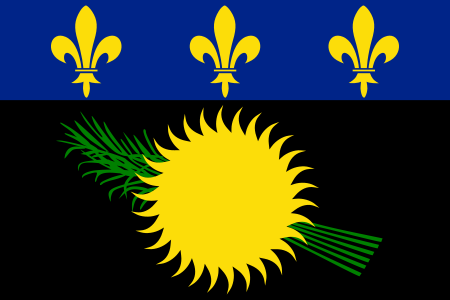
Guadeloupe, an archipelago in the Caribbean, offers stunning beaches, lush rainforests, and a rich cultural heritage. Explore its diverse landscapes and vibrant local cuisine.
Baie_des_Saintes_depuis_le_Fort_Napoléon_des_Saintes.jpg : Patrice78500 derivati · CC BY-SA 3.001
The best time to visit Guadeloupe is from December to April when the weather is pleasant and dry.
From December to April, expect pleasant weather and minimal rainfall.
From May to November, experience higher humidity and occasional storms.
From June to November, be aware of potential hurricanes.
02
Pick the neighbourhood by how you want the day to start and end, not by distance to one museum.
The bustling capital city, perfect for experiencing local markets and culture.
Can be crowded, especially during festivals.
A lively beach town with vibrant nightlife and beautiful beaches.
Popular among tourists, so expect more crowds.
Famous for its stunning beaches and laid-back atmosphere.
Ideal for families and those seeking tranquility.
A charming village known for its botanical gardens and scenic views.
Less commercialized, offering a more authentic experience.
Home to geothermal hot springs and beautiful coastal views.
Great for relaxation but limited dining options.
A vibrant town with a marina and access to nearby islands.
Can be busy during peak season.
A tranquil island known for its rum distilleries and beautiful beaches.
Ferry access required, but worth the trip.
An unspoiled island ideal for nature lovers and solitude seekers.
Limited accommodations available.
03
Everyday food, eaten the way locals do. Look for a busy place rather than a ranked list.
A flavorful curry dish often made with chicken or fish, found in local restaurants.
→ Try it with rice for a complete meal.
Fried cod fritters that are a popular snack, available at street vendors.
→ Perfect for a quick bite.
A spicy blood sausage typically served at local markets.
→ A must-try for adventurous eaters.
A dish made with grated cassava, fish, and spices, found in coastal eateries.
→ Great for those looking for local flavors.
Delicious fruit tarts available in bakeries across the islands.
→ Ideal for dessert lovers.
A hearty pork stew that reflects the island's culinary heritage.
→ Best enjoyed with local bread.
04
An order that works on foot, with the trip out of the first city at the end.
An active volcano offering hiking trails and stunning views.
A marine reserve perfect for snorkeling and diving.
A beautiful beach known for its clear waters and white sand.
A picturesque archipelago with charming villages and beaches.
A lush garden showcasing tropical plants and flowers.
A historic fort offering panoramic views of the surrounding area.
A stunning cave system that can be explored with guided tours.
A serene beach ideal for swimming and relaxation.
A museum dedicated to the history of slavery and the Caribbean.
A dramatic coastal point with breathtaking views.
A beautiful church known for its unique architecture.
A small islet perfect for a day trip and snorkeling.
05
Airport to city, across the city, and onward to the next region.
Pointe-à-Pitre International Airport (PTP) is the main gateway to Guadeloupe.
Regular ferries connect the main islands, making it easy to explore.
Renting a car is recommended for convenience and flexibility.
Buses operate between major towns, but schedules may vary.
Biking is a great way to explore the coastal areas.
06
Type C and E plugs are used in Guadeloupe.
Euros are the official currency; credit cards are widely accepted.
Tipping is appreciated but not mandatory; 10% is common.
French is the official language; English is spoken in tourist areas.
A travel eSIM covers maps and tickets after landing.
A week is ideal to explore the main attractions.