
Dry Season
A cooler period with minimal rainfall, ideal for travel.

Travel guide
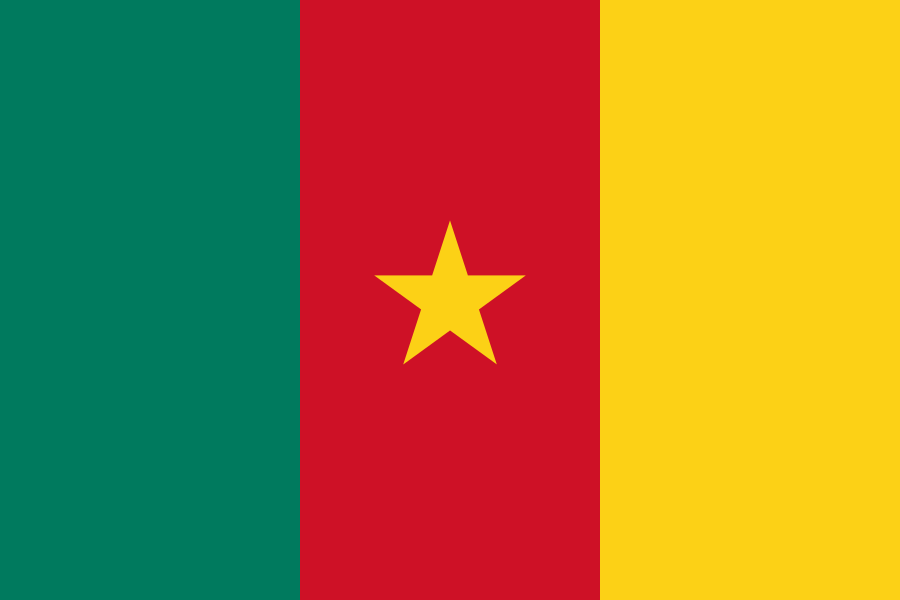
Cameroon, known for its diverse landscapes and rich cultures, offers travelers a unique experience from the bustling cities to serene natural parks.
Kribi.jpg : ymea derivative work: Jjtkk · CC BY-SA 3.001
The best time to visit Cameroon is during the dry season from November to February, when temperatures are cooler and rainfall is minimal.
A cooler period with minimal rainfall, ideal for travel.
Characterized by heavy rains, affecting travel plans.
A dry and dusty period, usually from December to February.
02
Pick the neighbourhood by how you want the day to start and end, not by distance to one museum.
The political capital with vibrant markets and cultural institutions.
Busy city life.
The economic capital, known for its port and lively nightlife.
Crowded and noisy.
A city in the Northwest Region, famous for its cool climate and scenic hills.
Less urban amenities.
A coastal town with beautiful beaches and a backdrop of Mount Cameroon.
Tourist-friendly.
Known for its stunning beaches and waterfalls, perfect for a relaxing getaway.
Limited nightlife.
A city in the North Region, offering a glimpse into the Sahelian culture.
Hot climate.
The former capital of British Cameroon, nestled at the foot of Mount Cameroon.
Cooler temperatures.
Located in the Western Highlands, known for its agricultural landscape.
Limited infrastructure.
03
Everyday food, eaten the way locals do. Look for a busy place rather than a ranked list.
A traditional dish made with bitter leaves, often served with fish or meat.
→ Try it at local eateries.
A popular West African dish made with rice, tomatoes, and spices.
→ Look for it at street vendors.
Spicy skewered meat, typically sold by street vendors.
→ Best enjoyed fresh.
A dish made from the leaves of the Eru plant, often cooked with meat.
→ Common in the Southwest.
A spicy broth made with fish or meat, popular across the country.
→ Perfect for cold evenings.
A steamed dish made from black-eyed peas, often served as a side.
→ Try it at local markets.
04
An order that works on foot, with the trip out of the first city at the end.
The highest peak in West Africa, offering hiking trails and stunning views.
A wildlife reserve known for its elephants and diverse fauna.
A beautiful garden showcasing Cameroon’s rich plant diversity.
A traditional palace that reflects the history of the Bafut people.
A crater lake known for its scenic beauty and geological significance.
A UNESCO World Heritage site, home to diverse wildlife and lush rainforest.
A landmark symbolizing the reunification of Cameroon.
A sanctuary for gorillas and other primates, ideal for eco-tourism.
Historic structures that showcase the colonial past of the region.
Famous for their white sands and clear waters, perfect for relaxation.
A museum showcasing the cultural heritage of Cameroon.
A rescue center for primates and other wildlife, promoting conservation.
05
Airport to city, across the city, and onward to the next region.
Cameroon is served by Douala International Airport and Yaoundé Nsimalen International Airport.
Buses and taxis are the primary means of transportation between cities.
There is a railway connecting Douala and Yaoundé, providing an alternative travel option.
Motorbike taxis are common in urban areas for quick trips.
Several airlines operate domestic flights to key destinations.
06
Cameroon uses type C and E plugs, with a standard voltage of 220V.
Credit cards are not widely accepted; carry cash for transactions.
Tipping is appreciated but not mandatory; round up the bill.
French and English are the official languages.
A travel eSIM covers maps and tickets after landing.
A stay of 10 to 14 days is recommended to explore key attractions.