
Dry Season
From May to September, this season offers pleasant weather and less rain, ideal for exploring.

Travel guide
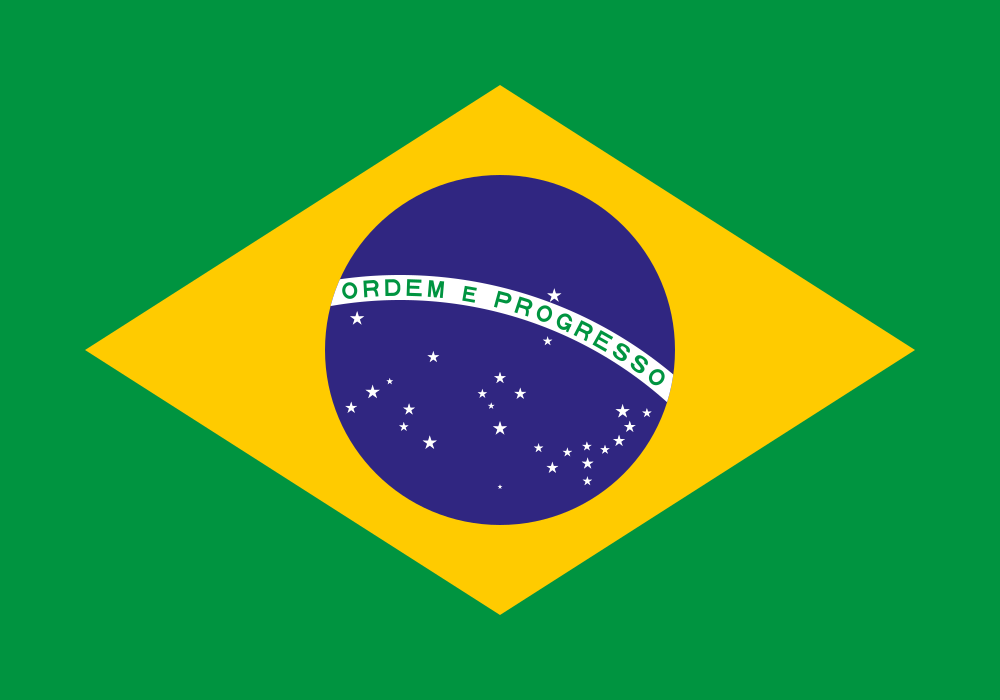
Brazil, the largest country in South America, is known for its vibrant culture, stunning landscapes, and diverse ecosystems. From the Amazon rainforest to the beaches of Rio de Janeiro, Brazil offers a plethora of experiences for travelers.
Botafogo180o_M.jpg : Luis Rizo derivative work: Jjtkk · Public domain01
The best time to visit Brazil varies by region, but generally, the dry season from May to September is ideal for most areas.
From May to September, this season offers pleasant weather and less rain, ideal for exploring.
From October to April, expect heavy rains, especially in the Amazon and Northeast regions.
Typically in February or March, this vibrant festival is celebrated with parades and parties across the country.
02
Pick the neighbourhood by how you want the day to start and end, not by distance to one museum.
Famous for its beach and nightlife, Copacabana is a vibrant neighborhood in Rio de Janeiro.
Expect crowds, especially in peak season.
Known for its stunning beach and upscale shops, Ipanema is a must-visit in Rio.
Great for sunbathing and people-watching.
The historic center of Salvador, Pelourinho is famous for its colonial architecture and vibrant culture.
Be cautious of your belongings.
A sophisticated neighborhood in São Paulo known for its parks and dining options.
Perfect for food lovers.
A lively neighborhood in Rio de Janeiro known for its samba clubs and nightlife.
Best visited after dark.
Gateway to the Amazon rainforest, Manaus offers unique eco-tourism experiences.
Plan excursions in advance.
Famous for its ecotourism and crystal-clear rivers, Bonito is a paradise for nature lovers.
Book activities ahead of time.
Known for its innovative urban planning and green spaces, Curitiba is a model city in Brazil.
Explore the parks by bike.
03
Everyday food, eaten the way locals do. Look for a busy place rather than a ranked list.
A traditional black bean stew with pork, best enjoyed in Rio de Janeiro.
→ Try it on a Wednesday or Saturday.
Cheese bread that is a popular snack throughout Brazil, especially in Minas Gerais.
→ Perfect for breakfast or a snack.
A deep-fried ball of black-eyed pea dough filled with shrimp, found in Bahia.
→ Look for street vendors for the best experience.
A sweet chocolate truffle made with condensed milk, found everywhere in Brazil.
→ A must-try dessert.
A fish stew made with coconut milk, found in Bahia and Espírito Santo.
→ Enjoy it with rice.
A popular snack made of shredded chicken wrapped in dough and fried, available nationwide.
→ Great for a quick bite.
Brazilian barbecue featuring various meats, especially in the southern regions.
→ Join a local churrascaria for the full experience.
04
An order that works on foot, with the trip out of the first city at the end.
An iconic statue overlooking Rio de Janeiro, offering panoramic views of the city.
One of the largest and most impressive waterfalls in the world, located on the border with Argentina.
The largest rainforest in the world, home to diverse wildlife and indigenous cultures.
A peak in Rio de Janeiro offering stunning views and hiking opportunities.
The world's largest tropical wetland, known for its wildlife and eco-tourism.
A UNESCO World Heritage site filled with colonial architecture and vibrant culture.
A national park known for its stunning sand dunes and seasonal lagoons.
A world-famous beach known for its lively atmosphere and beautiful scenery.
An opera house in Rio de Janeiro known for its stunning architecture and performances.
Another iconic peak in Rio, offering breathtaking views of the city and coastline.
A renowned art museum housing a vast collection of Western art.
A historic town known for its baroque architecture and rich history.
A historic fort located in Florianópolis, offering beautiful views of the coastline.
Considered one of the most beautiful beaches in the world, located in Fernando de Noronha.
A stunning neo-Gothic cathedral located in the heart of São Paulo.
05
Airport to city, across the city, and onward to the next region.
Brazil has several international airports, including São Paulo/Guarulhos and Rio de Janeiro/Galeão. Major airlines operate domestic flights across the country.
Long-distance buses are a popular and affordable way to travel between cities, with extensive networks connecting major destinations.
Renting a car can be a great way to explore Brazil's diverse landscapes, especially in rural areas.
Cities have public transport options, including buses and metro systems, making it easy to navigate urban areas.
Ride-sharing apps are widely used in major cities, providing a convenient way to get around.
06
Brazil uses type N plugs, with a standard voltage of 127/220V.
Credit cards are widely accepted, but it's advisable to carry cash for small purchases.
Tipping is customary in restaurants, usually around 10%.
Portuguese is the official language of Brazil.
A travel eSIM covers maps and tickets after landing.
A trip of at least 10 days is recommended to explore major attractions.